
A daughter in Wellington. A father in Dunedin. Peace of mind for both.

Your family member's door, handled.

Soter manages visitors at the door so your family member who is elderly or has a disability doesn't have to: screening callers, alerting you when it matters, and keeping a clear log of who came by.

Purchase   See it in action

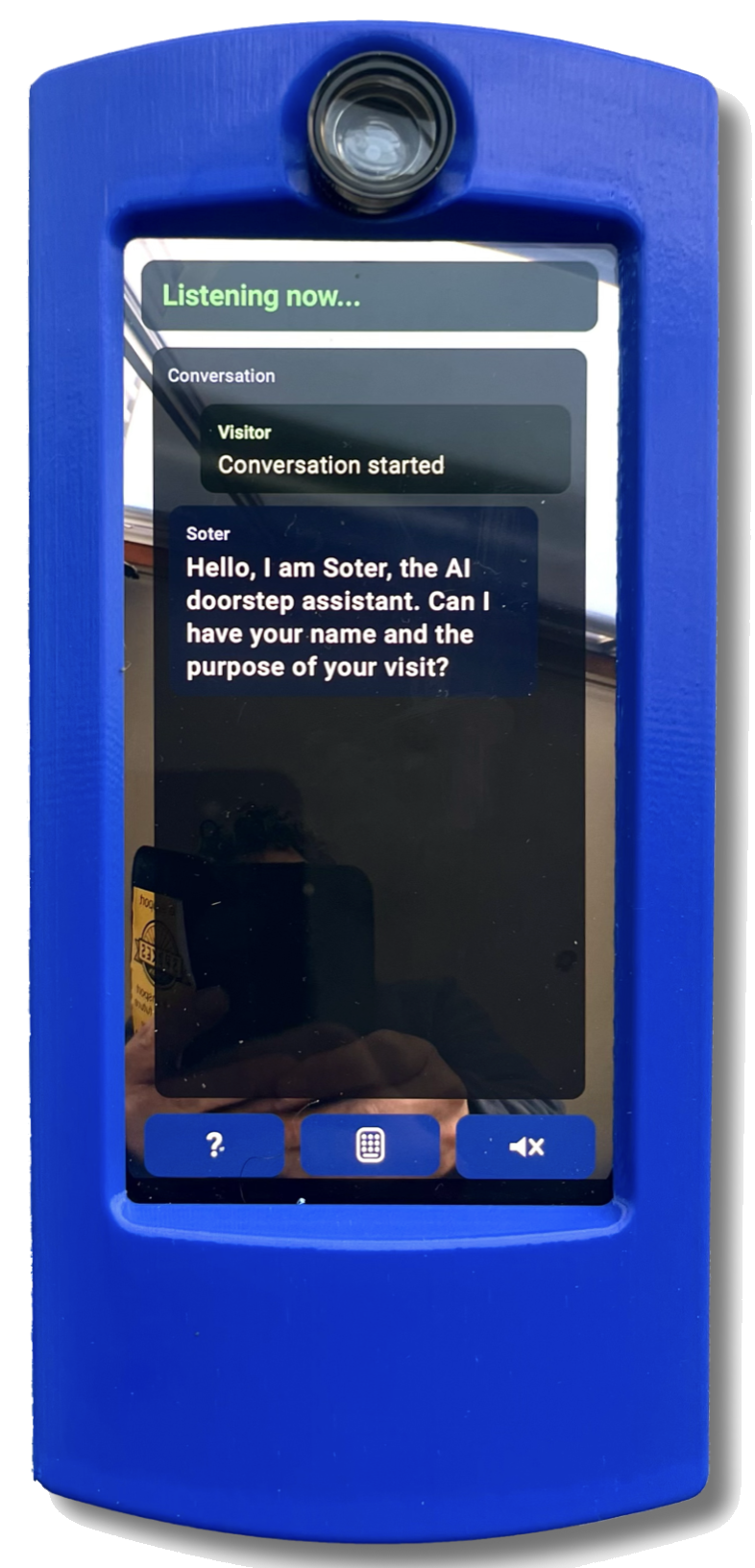
Soter doorstep assistant unit greeting a visitor: 'Hello, I am Soter, the AI doorstep assistant. Can I have your name and the purpose of your visit?'

Why Soter exists

The door is harder than it looks

For many older and disabled adults, answering the door is a daily source of anxiety, risk, and isolation.

Doorstep pressure

Unknown callers create anxiety

Age UK explains that doorstep scams happen when someone comes to the door to trick a person out of money or gain access to their home, often by posing as a trader, salesperson, charity collector, utility official, police or bank worker, delivery person, or someone needing help. The article stresses that scammers may appear polite and friendly rather than obviously aggressive, and advises people not to open the door unless they are comfortable, to use "Stop, Lock, Chain and Check", to ask for ID, verify callers using an independent phone number, refuse pressure selling, avoid signing anything immediately, never hand over bank cards or valuables, and report scams to Report Fraud, Citizens Advice, or the police where appropriate.

The advice is sensible in principle, but it assumes a level of confidence, eyesight, memory, mobility, hearing, and administrative stamina that many vulnerable older people may not have in the moment. Someone with poor vision may struggle to read an ID badge or a phone number on a bill; someone with cognitive impairment may find it hard to remember the "Stop, Lock, Chain and Check" sequence under pressure; and even a fully capable person may find "just phone the utility company" unrealistic when modern call centres, automated menus, account checks, and long hold times make it difficult to reach a real person quickly. In practice, the problem is not just lack of information - it is that the verification process often has to happen at the exact moment the person is being pressured, confused, or frightened at their own front door.

Reduced mobility

Getting to the door is hard

Modern life moves fast at the doorstep. Delivery drivers are under pressure to complete their rounds, and they rarely wait long enough for someone who needs extra time to reach the door. For some people, getting to the door at all is not possible.

Every missed knock has a cost: the parcel goes back to the depot, the care visit is recorded as a no-answer, and a friend assumes nobody is home. Over time, those missed visits chip away at exactly the independence everyone is trying to protect.

Distance and worry

Families cannot always be there

Many adult children live in another city — or another country — from the person they worry about. An unanswered phone call, a missed care visit, or a news story about doorstep scams can turn an ordinary afternoon into hours of anxiety. The usual responses are to ring more often, drop in unannounced, or start conversations about moving into supported care earlier than anyone really wants.

Soter replaces guessing with a clear, factual picture of what is happening at the door: who came, what they wanted, and how the visit was handled. Family members receive alerts only when something genuinely needs them, and can review the full visit history at any time. The person at home keeps their independence; the family gets real peace of mind instead of reassurance by phone tag.

Video doorbells make the person inside do the work

A doorbell says: “Someone’s outside. You deal with it.” Soter says: “I’ll talk to them first.”

How Soter works

Handles the door. Keeps everyone informed.

Soter works autonomously, so the person at home does not need to do anything unless they want to.

Step 1

Caller arrives

When someone approaches the door, Soter greets them politely and asks who they are and why they are visiting — in natural spoken conversation. Visitors do not need to press a button, read instructions, or know anything about the household. They just talk, the way they would to a person.

This matters for the people who come to the door every day. A courier in a hurry gets a quick, clear interaction. A support worker is recognised and welcomed. A stranger is asked, calmly and consistently, to explain themselves — something many occupants find hard to do through a chained door.

Step 2

Smart identification

Soter has an understanding of the household's normal comings and goings. Expected appointments, frequent visitors, and regular deliveries can be recognised and handled automatically, so the people who should be at the door are never treated like intruders.

Unknown callers get a different level of attention. Soter screens them through conversation — who they are, who they represent, and what they want — before anything is passed on to the occupant or their family. Recognition of known visitors is consent-based and controlled by the household.

Step 3

Interaction managed

Once Soter understands why a visitor has come, it deals with the visit. A parcel can be directed to a safe spot and logged. A message can be taken and passed on. A cold caller or suspected scam visit can be politely but firmly declined — without the occupant ever coming to the door or feeling pressured in the moment.

Routine visits are completed from start to finish without interrupting the person inside. They stay in control: they can listen in, join the conversation, or let Soter handle it entirely.

Step 4

Family and carers notified

When a visit needs a human decision, the right person hears about it — with context. Alerts say who came, what they wanted, and what Soter has done so far, so a family member or carer can respond usefully from wherever they are, rather than just seeing "motion at the front door".

Alerts can escalate to nominated contacts, so if the primary occupant is unavailable their family or carer is told. Every visit — routine or not — is recorded with its time, purpose, and outcome, giving everyone a shared, factual history of the doorstep.

From the Dunedin trial

Tested at real doors, not in a lab

Soter is being trialled in eight Dunedin households as part of a funded pilot. Since May 2026 it has been living on real front doors: greeting couriers, screening unknown callers, verifying appointments, and keeping families and carers in the loop. At the end of June the trial was been extended for a further four weeks — and participants most often say Soter helped them know who was at the door and why they came, without having to hurry to answer it.

These are early, draft findings from a trial that is still running, and every lesson from these doorsteps goes directly into the product ahead of launch.
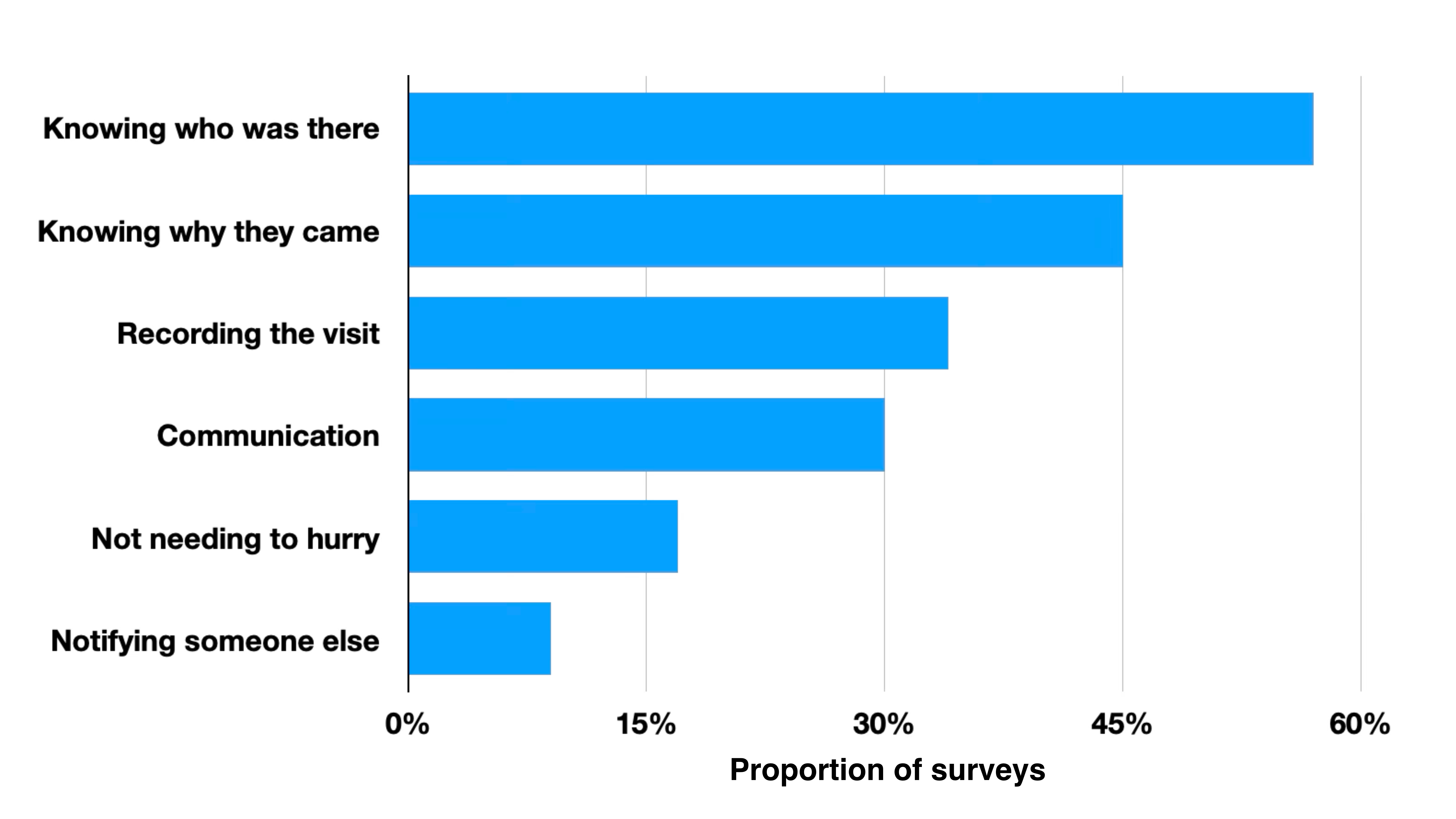
Bar chart of survey responses showing what Soter helped with: knowing who was there (30), knowing why they came (24), recording the visit (18), communication (16), not needing to hurry (9), and notifying someone else (5).
What Soter helped with — participant survey responses during the trial.
100%
Households want to keep Soter
Every household in the trial has asked to continue after it ends
3,805
Doorstep events recorded
Across 215 household-days of real use since May 2026
1,821
Visitor interactions handled
Deliveries, known visitors, and unknown callers screened at the door
57 secs
Average length of a conversation
Short conversations that quickly establish the identity and purpose of the visitor

What's included

Built for real-world doorsteps

Every feature is shaped around safer access, remote visibility, and simple everyday use.

At the door

Natural conversation

Soter talks with visitors the way a person would — no buttons, menus, or robotic prompts. It greets people, asks sensible questions, understands the answers, and keeps the exchange short and courteous. Visitors need no instructions and no app; they just speak.

Because the conversation is genuinely two-way, Soter can do more than announce that someone is there. It can find out who the visitor is, what they need, confirm delivery addresses and appointements and decide what should happen next.

Built for outdoors

Weatherproof hardware

The Soter unit is designed to live outside, at a real front door, year round. That means rain, wind, salt air, and direct summer sun — the conditions New Zealand doorsteps actually see — without needing a porch, a cover, or seasonal removal.

Hardware being trialled in Dunedin homes right now is exposed to exactly these conditions... although more sun would be welcome!

Getting set up

Easy self-install

Soter is designed so that a competent family member can fit it: a flexible mounting plate system that can be attached using screws or a special tape, a low-voltage power feed that can run through the door jamb on a thin ribbon cable, and a door sensor that arrive pre-configured and ready to place.

No electrician is required for a standard setup, and professional installation will be available for households that prefer it or have unusual doorways.

Always connected

Wi-Fi and cellular

Soter can connect over the home's Wi-Fi, over a cellular connection, or both. With both configured, it can fail over automatically — so if the home broadband drops, the doorstep stays covered and alerts keep flowing.

This matters most for the households Soter is built for, where "the internet is down" cannot be allowed to mean "nobody is watching the door".

Through power cuts

Battery backup

A built-in battery is designed to keep Soter running through power interruptions. Power cuts are precisely the moments when an unexpected caller, a missed care visit, or a worried family member matter most — so coverage should not stop when the lights do.

Combined with cellular fallback, the aim is simple: no gap at the door.

Context, not cameras

Indoor sensors

In addition to the supplied door sensor, optional senosrs can track movement and use of household devices, improving reporting and helping Soter understand context. Sensors arrive pre-configured, so adding them is a matter of placing them, not programming them.

New

Smart speaker integration

Our dedicated indoor unit is a smart speakers with a remote screen is planned, so occupants can hear who is at the door and respond without using a mobile phone. We are testing integrations with selected commercial smar speaker eco systems.

The right person, every time

Carer escalation

When a visit needs a human decision, Soter alerts the household's nominated contacts. If the first person does not respond, the alert moves to the designated escalation person or persons — often family members or a care provider. This can vary by time, so no single family member has to be permanently on duty, and nothing important falls through the gaps because one phone was on silent.

Trusted access

Remote door unlock

For homes with a compatible smart lock, Soter is designed to support remote unlocking: the occupant, a family member or carer can let in the physiotherapist, the district nurse, or a trusted neighbour from their phone, after Soter has verified who is at the door.

Expected visitors

Appointment access

Appointments, regular services, and expected deliveries can be set up in advance, so Soter knows who is due and when. The gardener who comes every second Tuesday and the pharmacy delivery due this afternoon, and once identified, granted access.

One door, several people

Multi-person households

Many homes are not one person living alone — they are couples, flatmates, or families where only one person needs extra support. Soter supports a profile for each person in the home, so visitors for different occupants are handled and routed appropriately.

Alerts, escalation chains, and privacy settings can be tailored per person, so everyone gets the level of involvement that is right for them.

In your pocket

Family and carer apps

The occupant and carer apps are where everything comes together: real-time alerts with context, the full visit history, visitor and appointment lists, and every setting — all manageable remotely, so nothing requires a trip across town to adjust.

The apps can be set up to suit the user: simple and uncluttered for the person at home, and informative at a glance for the family member or carer interested in the details.

Who Soter is for

Built for the people who matter

Soter serves two audiences equally: the person at home, and the family or carer watching over them.

For families & carers

Stay connected without hovering

Know who is at your family member's door, respond if needed, and get on with your day without moving in with them.

  • Real-time alerts when unknown visitors arrive
  • Full visit history with timestamps
  • Escalation chain – alerts go to backup carers if you miss them
  • Door opening and person exit tracking
  • Works across multiple family members in one account
  • Manage all settings remotely
Learn more for families →

For care providers

Institutional-grade doorstep management

Soter integrates with aged care, independent living, and disability support operations at scale.

  • Centralised dashboard across multiple properties
  • Verified carer and contractor access management
  • Automated entry records for compliance
  • Integration with care-tech platforms via API
  • Customisable alert workflows per resident
  • White-label and reseller options available
Enquire about partnerships →

Pricing

Simple pricing.

Pricing is still being finalised, but these targets show the structure we are working towards.

Hardware target
400 NZD

Anticipated one-off device price for the Soter doorstep assistant hardware.


  • Weatherproof outdoor unit
  • Self-install mounting
  • Battery backup
Subscription target
40 NZD /mo

Estimated monthly service cost for connectivity, AI handling, history storage, alerts, and app access.


  • Visitor screening
  • Family and carer notifications
  • Secure visit history
Add-ons
TBC

Optional extras for homes that need a broader setup or additional access workflows.


  • Dedicated indoor terminal
  • Additional indoor sensors
  • Smart lock integrations
  • Installation support options

Final product specifications, price, subscription terms, installation requirements, and delivery timing will be confirmed before final order.

Common questions

Answers, before you ask

What happens to recordings and conversations?

Soter processes each visit to do its job, then keeps only what the household chooses to keep. Visit records are scoped to the household, occupants control retention, and recognition of known visitors is consent-based.

Do we need an electrician to install it?

Not generally: Soter is designed to be self-installed. An innovative cable allows the low-voltage connection to the power supply to pass though door jambs and the unit is light enough to be secured with supplied 3M tape. Professional installation is available where households prefer it.

What if the internet or power goes out?

Soter is designed to connect over Wi-Fi, cellular, or both, and a built-in battery backup is designed to keep it running through power cuts.

Is the reservation deposit refundable?

Yes - fully refundable any time before you confirm a final order. We will confirm final pricing, specifications, and delivery timing with you before asking you to commit.

Contact

Talk to Intermentis

Ask about Soter, partnerships, care-provider workflows, or reserving a place.
By sending this message you agree to be contacted by Intermentis about this enquiry.